
Middle balls can be tricky because they require more than good paddle skills. They require awareness, communication, and an understanding of how you and your partner can work together to cover the court.
There isn’t one rule that works in every situation. While the forehand often has an advantage when reaching for a middle ball, positioning, shot trajectory, and the players involved all matter.
Here’s how to make better decisions and avoid leaving the middle open.
1. Establish a Plan Before the Rally Starts
One of the easiest ways to prevent confusion is to talk with your partner before the game begins.
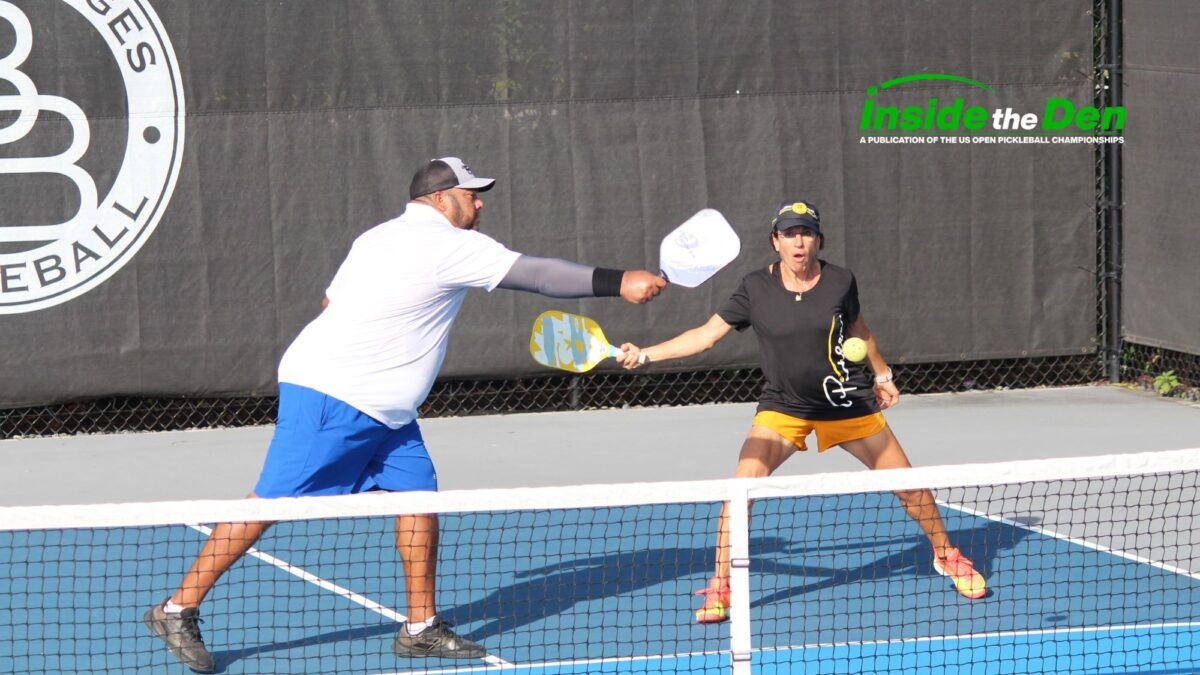
You don’t need an elaborate strategy. A quick conversation about who generally takes middle balls can help you avoid hesitation when the rally gets fast. For example, you might agree that the player with the forehand in the middle will generally take balls that are within comfortable reach. In other situations, you might assign responsibility based on each player’s strengths or the formation you’re using.
The important word is generally. Your agreement should serve as a starting point, not a rule that overrides every situation. If one player is clearly better positioned to reach a ball, that player may need to take it regardless of whose forehand is in the middle.
2. Consider More Than Just the Forehand
You’ve probably heard the advice that the forehand should take the middle. It’s a useful guideline, especially when two right-handed players are playing side by side, but it isn’t always the right decision.
Consider these factors:
- Positioning: Which player is closer to the ball and better balanced to reach it?
- Reach: Can one player comfortably intercept the ball while the other would have to stretch?
- Shot Trajectory: Is the ball traveling into one player’s body or toward the other player’s forehand?
- Time: Is there enough time to communicate, or does one player need to make an immediate decision?
- Player Strengths: Does one partner have a stronger overhead, drive, or other shot that makes them better suited to a particular ball?
Determine who has the best opportunity to make a controlled, effective shot.
3. Communicate Early and Clearly
When both players wait to see what the other will do, the ball often wins. Simple calls such as “mine,” “yours,” or “switch” can prevent confusion. The key is to communicate early enough for your partner to react.
You don’t have to call every ball. With experience, partners can learn to anticipate each other’s movements. However, verbal communication is especially useful when playing with a new partner or facing opponents who hit hard through the middle.
After the rally, if a misunderstanding occurs, discuss it briefly and move on. The purpose of communication is to improve coordination, not to assign blame.

4. Move Together After the Shot
Covering the middle isn’t just about deciding who hits the ball. It’s also about maintaining court coverage after the shot. When one player moves toward the middle to intercept a ball, the other should recognize the movement and adjust accordingly. Otherwise, you may successfully cover the middle but leave a large opening elsewhere.
In general, doubles partners should move in coordination, adjusting their positions based on the ball and their partner’s location.
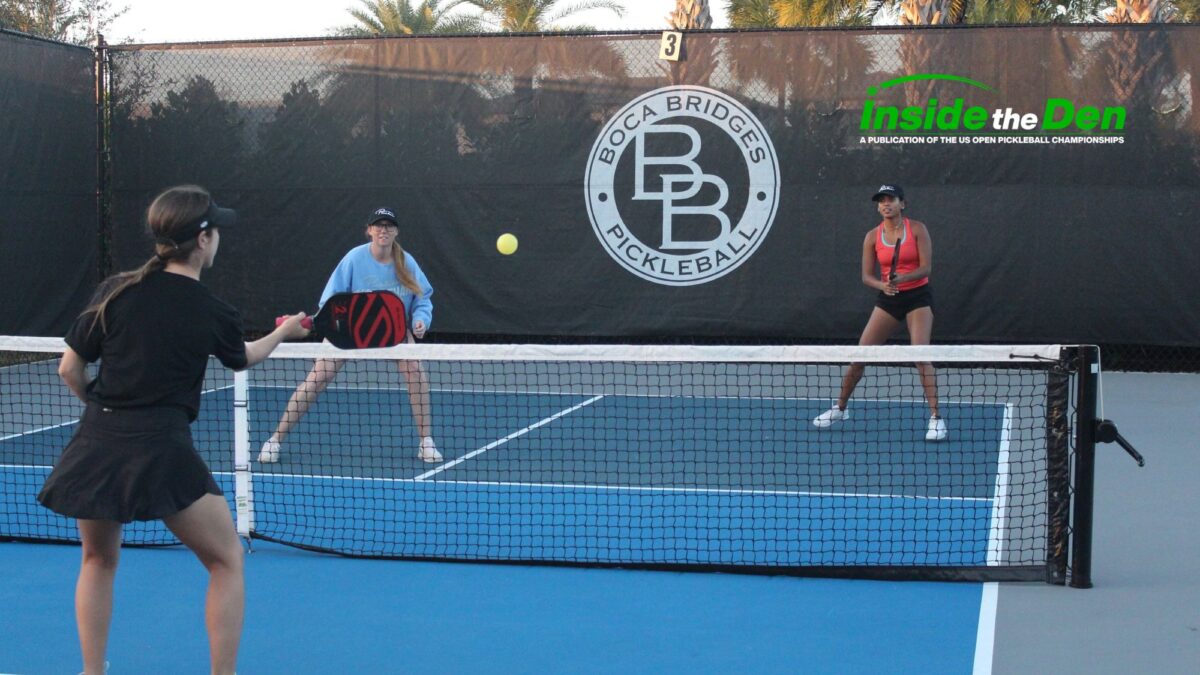
For example, if your partner moves toward the middle to take a ball, you may need to shift toward the sideline to help cover the space they leave behind. If both players remain planted in their original positions, your opponents may be able to exploit the gap.
5. Recognize When the Middle Is a Good Target
While you need to work together to defend the middle, you can also use it to put your opponents on the defensive by targeting the space between them. A shot through the middle can force your opponents to hesitate or leave the ball untouched.
However, experienced partners may cover the middle effectively, and a predictable shot can become an easy setup for their next attack. Instead, pay attention to your opponents. If they repeatedly hesitate on middle balls, use that information. If one player consistently takes control of the middle, consider changing your target or varying the pace and placement of your shots.
The goal is to make your opponents uncomfortable, not simply to hit toward the center of the court.
6. Practice Your Middle-Ball Decisions
You can improve middle-ball coverage without needing a complicated drill.
During practice, ask a partner to feed balls toward the space between you and your doubles partner. Alternate between balls that are closer to one player and balls that require a decision from both players.
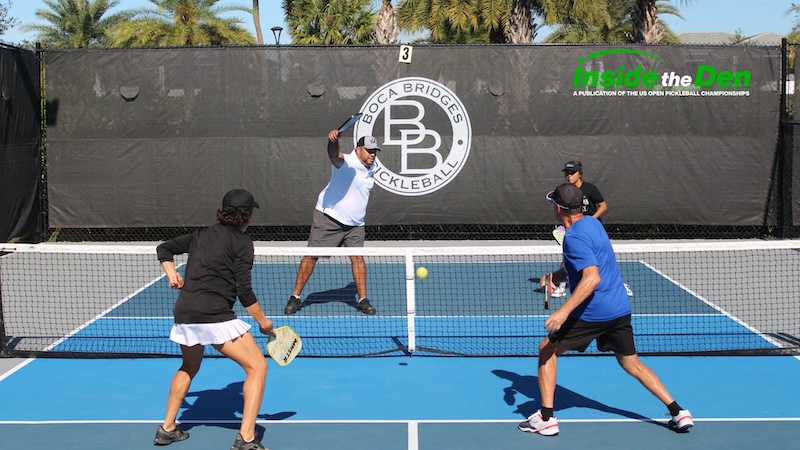
Focus on three things:
- Make an early decision about who will take the ball.
- Communicate when necessary.
- Recover into a balanced position after the shot.
Don’t measure success only by whether you hit the ball. Use the opportunity to evaluate your communication, your decision-making as a team, and whether you and your partner stayed in a good position for the next shot.
Work as a Team, Not as Two Individual Players
Good doubles coverage depends on more than individual skill. It requires two players who understand their responsibilities, communicate effectively, and adjust to each other’s movements.
Before your next game, agree on a general plan for middle balls. During play, make decisive calls and pay attention to your partner’s position. Afterward, talk about any confusing situations and decide what you might do differently next time.
You won’t eliminate every missed middle ball, but a little preparation and communication can help you turn a common source of confusion into a team strength.
WANT MORE PICKLEBALL TIPS AND STRATEGIES?
Good doubles play starts with communication, both before and during a rally. Learn How to Communicate with Your Partner to Improve Your Pickleball Play to coordinate your strategy, call shots, and work together on the court.
If you want more pickleball tips and strategies on every aspect of your pickleball game, check out Inside the Den’s online video lesson collection called My Pro Pickleball Coach. My Pro Pickleball Coach is a fraction of the price of one clinic or even one lesson, and features over 140 video lessons (over 7 hours of instruction!), as well as a corresponding e-book. These online video lessons are available on demand 24/7 and breakdown every aspect of the sport of pickleball, including pickleball drills, strategy, and advanced concepts, so you will play your best pickleball.